
Morris County NJ Restraining Order Lawyers
Attorney Needed – Restraining Order Hearing in Morris County Court

Domestic violence
Need a lawyer for a domestic violence restraining order trial in Morris County? Contact us now for immediate assistance and a free initial consultation.
The Morristown restraining order lawyers at our law office represent both Plaintiffs and Defendants involved in restraining order matters at the Morris County Superior Court located in Morristown, New Jersey. Our attorneys have literally handled hundreds of restraining order cases and practically appear on a restraining order in Morris County every week (sometimes multiple times a week). With our offices conveniently located down the street from the courthouse in Morristown, we are available to assist you immediately at 908-336-5008.
Domestic Violence Restraining Order Hearings in Morristown, NJ
Restraining orders are civil in nature so they are handled by the Family division in the Superior Court in which the restraining order was issued. The trial will be before a judge (not a jury) and the standards of proof are lower than a criminal case because it is civil in nature. The standard of proof in a criminal case is “beyond a reasonable doubt”, while the standard of proof in a civil case is called “by a preponderance of the evidence”: this basically means “more likely than not” or a “51%” proof requirement to satisfy the civil standard of proof. If a final restraining order is issued, this can have serious, long-lasting implications for a defendant.
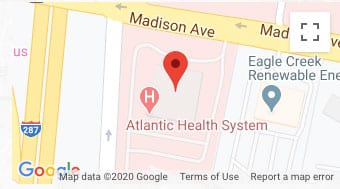
In Morris County, the temporary and final restraining orders are handled at the Morris County Superior Court, Family Division. Here is the court information:
Family Part
56 Washington St.
Morristown, NJ 07960
862-397-5700 ext. 75145
Where do I apply for a temporary restraining order (TRO)?
You can apply at the local police department (who will contact the court) or you can apply at the domestic violence unit, family division of the Superior Court in the county in which you live or the county in which the alleged domestic violence took place.
Once the restraining order is issued, what happens next?
After the TRO is issued, the defendant must be served with the court order and then a court date will be scheduled (usually within 10 days). When the parties appear in court, the Judge will ask the Plaintiff how he or she wants to proceed. Some of the options include:
- Dismiss the case – if they want to dismiss they have to speak to DV counselors, sign off on some paperwork, and dismiss on the record with the Judge confirming they are doing so freely and voluntarily and they are not being forced or threatened.
- Postpone case to get a lawyer
- Postpone case to gather evidence
- Discuss a potential settlement resolution called civil restraints
- Postpone to amend the restraining order to add more information
- Proceed to trial
If they want to proceed to trial, it will usually be postponed to another date for that. The Judges have older cases they need to hear first. Both parties are usually entitled to one postponement (adjournment) for any reason such as preparing their evidence, getting a lawyer, etc.
What does a victim need to prove to get a final restraining order (FRO) at trial?
In order to get a final restraining order (FRO) in NJ, a Plaintiff (victim) must prove that a predicate act of domestic violence occurred (such as assault, harassment, stalking, terroristic threats, criminal mischief, etc.). They must also show a prior history of domestic violence (in most cases unless the act of DV is extremely egregious). Finally, they must show that they are in fear for their safety and need the protection of a restraining order.
In order to prove these things, the plaintiff will testify. They will also admit any evidence they have such as:
- Emails
- Text Messages
- Voicemails
- Socia media posts
- Pictures of injuries
- Pictures of damage to property
- Videos
- Witness testimony
- Medical records
- Police reports
Once the Judge hears all of the evidence from the Plaintiff and the defendant, they will make a ruling. The temporary restraining order will be dismissed if the Plaintiff fails to meet their burden of proof or the final restraining order will be issued against the defendant. If the TRO is dismissed, all of the restraints are removed.
What happens if a Final Restraining Order (FRO) is Issued?
If a final restraining order is issued in New Jersey, the following collateral consequences can be an issue:
- Fingerprinted, placed in a statewide database for domestic violence offenders
- Forced to complete domestic violence counseling
- Forced to pay plaintiff’s attorneys fees
- Pay a fine
- Can not own firearms
- Could effect immigration status
- Could effect professional licenses
- Restraining order is permanent and never expires
- If restraining order is violated, arrested and charged with contempt
- Could effect traveling in and out of the country
As a result, it is imperative that, if you are a defendant in a Morristown restraining order matter, you need to do everything you can to avoid having this final restraining order issued against you. Although you can represent yourself, you need an experienced Morris County NJ trial attorney who knows the rules of court and rules of evidence to properly defend you. In addition, it is a lot to risk if you represent yourself and then the final restraining order (FRO) is issued by the Judge: It is permanent and never expires.
Frequently Asked Questions (FAQ) Regarding Domestic Violence Restraining Orders in Morristown NJ
FAQ: If a temporary restraining order (TRO) is issued against me in Morris County, where will it be handled?
Temporary restraining orders issued anywhere in Morris County will be handled at the Morris County Superior Court, Family Division, located at 56 Washington Street in Morristown, NJ.
FAQ: Can I appeal the issuance of a TRO against me?
Yes, you can hire an attorney to do that for you or you can try to file paperwork yourself with the court.
FAQ: Who has the burden of proof at a restraining order trial?
The Plaintiff (alleged victim) has the burden of proof at a restraining order trial in NJ and that burden is called by a “preponderance of evidence” which is more likely than not (51%) standard of proof.
FAQ: What does a Plaintiff have to prove to get a final restraining order (FRO)?
The Plaintiff must prove that a predicate act of domestic violence occurred, there is a prior history of domestic violence between the parties, and that they are in fear for their safety and need the protection that a restraining order provides.
FAQ: What happens if a final restraining order is issued?
This is permanent in NJ and never expires. The defendant is prohibited from having any contact with the plaintiff and any other protected parties listed on the order. They are fingerprinted and placed into a database for domestic violence offenders.
FAQ: If the restraining order is dismissed, do I need to file an expungement?
No, this is a civil case so there is nothing to expunge.
FAQ: If the restraining order is dismissed, can I get my guns back?
Possibly, that’s up to the Morris County Prosecutor’s office. If they move to forfeit your weapons, we can help you fight that in court.
Local Restraining Order Attorneys in Morristown NJ
Usually a final restraining order (FRO) hearing is scheduled within 10 days of the temporary restraining order being issued. Also, the Judge will typically allow you one adjournment (postponement) to speak to and hire legal counsel to represent you at this final hearing. For more information, contact the Morris County NJ restraining order attorneys at our Morristown office at 908-336-5008.
Legally Reviewed By:
Travis J. Tormey, Esq.
Criminal Defense Attorney | New Jersey